
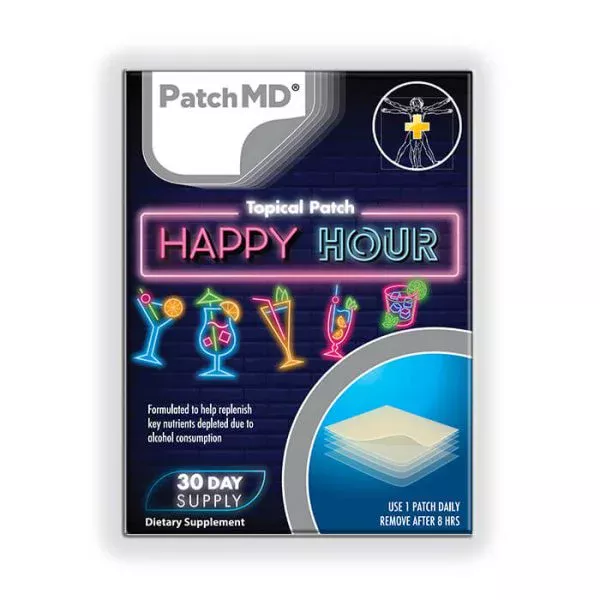
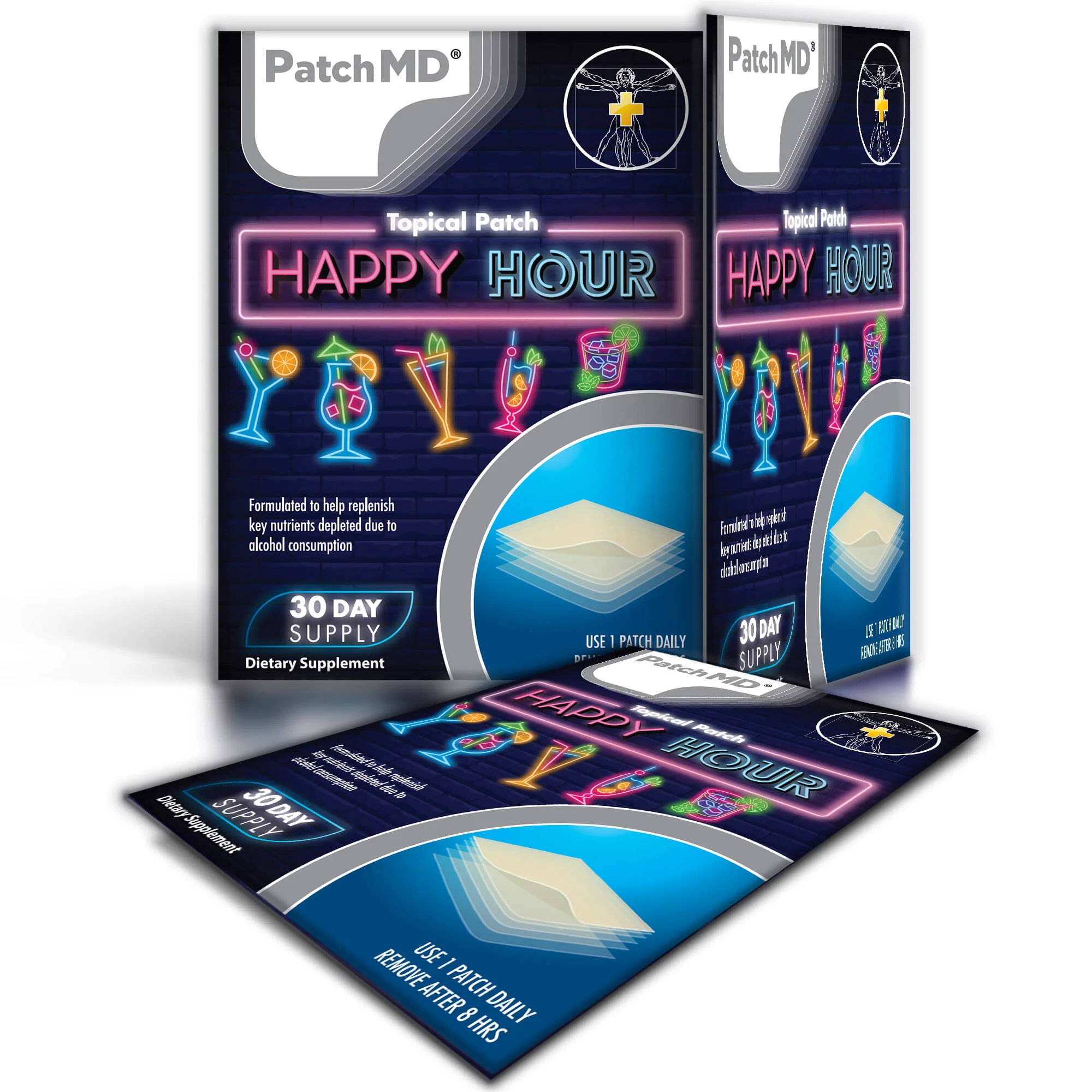

Happy Hour Hangover Patch (30-Day Supply)
Happy Hour (Formerly Hangover Patch)
Original price was: $23.95.$19.95Current price is: $19.95. — or subscribe and save 40%
Availability: In Stock
×
Availability: In Stock
-
 Supports brain health & function
-
 Non-stimulant
-
 stimulate your brain health
-
 powerful antioxidant
How do you take your vitamins?
As seen in





Description
Say Goodbye to Hangovers: The Best Hangover Patches for Optimal Brain and Body Function
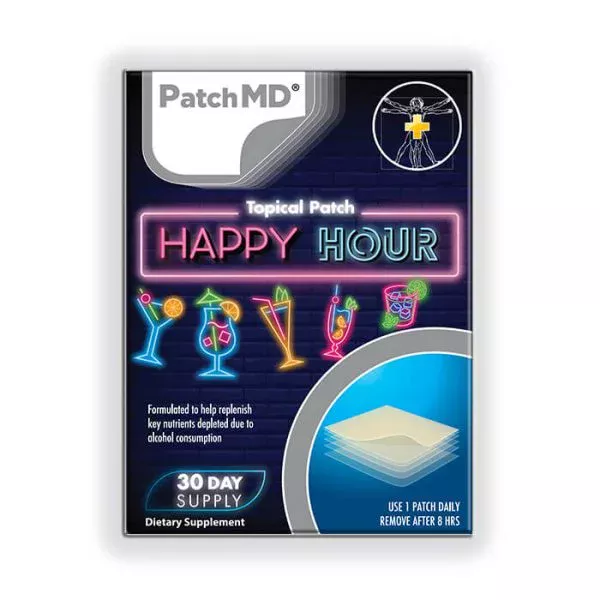
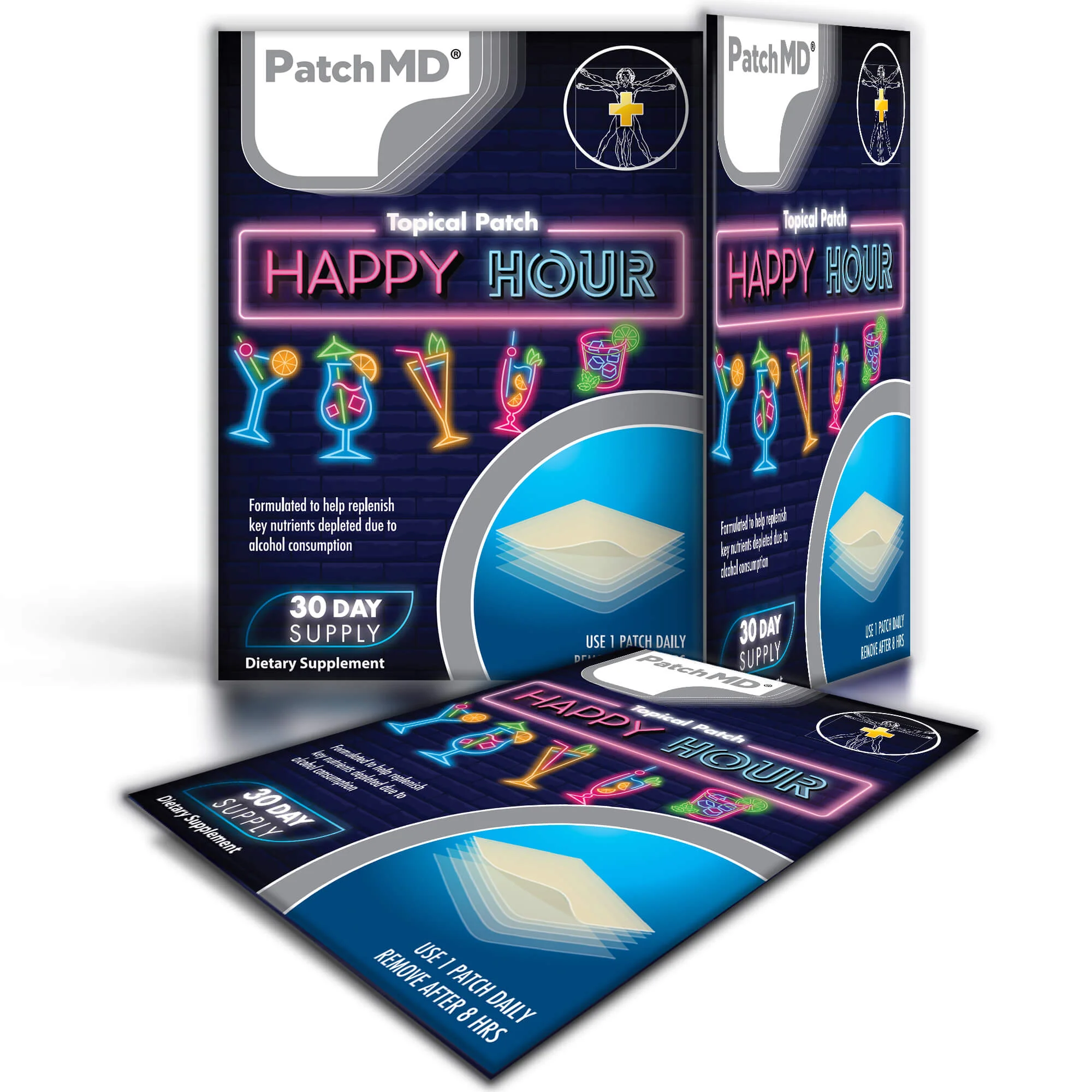
Introducing the Happy Hour Hangover Patch by PatchMD – your go-to solution for maintaining optimal brain and body function after alcohol consumption. Designed to be the best hangover patch on the market, it targets the after-effects of drinking, replenishing depleted nutrients resulting from alcohol intake.
Hangover Defense & Relief Patch
Our unique patch is backed by drug administration approved studies, demonstrating its effectiveness in managing alcohol blood levels and supporting your body once you’ve stopped consuming alcohol. It’s engineered to enhance bodily processes by infusing beneficial nutrients directly into your system.
Extreme Hangover Patch Formula
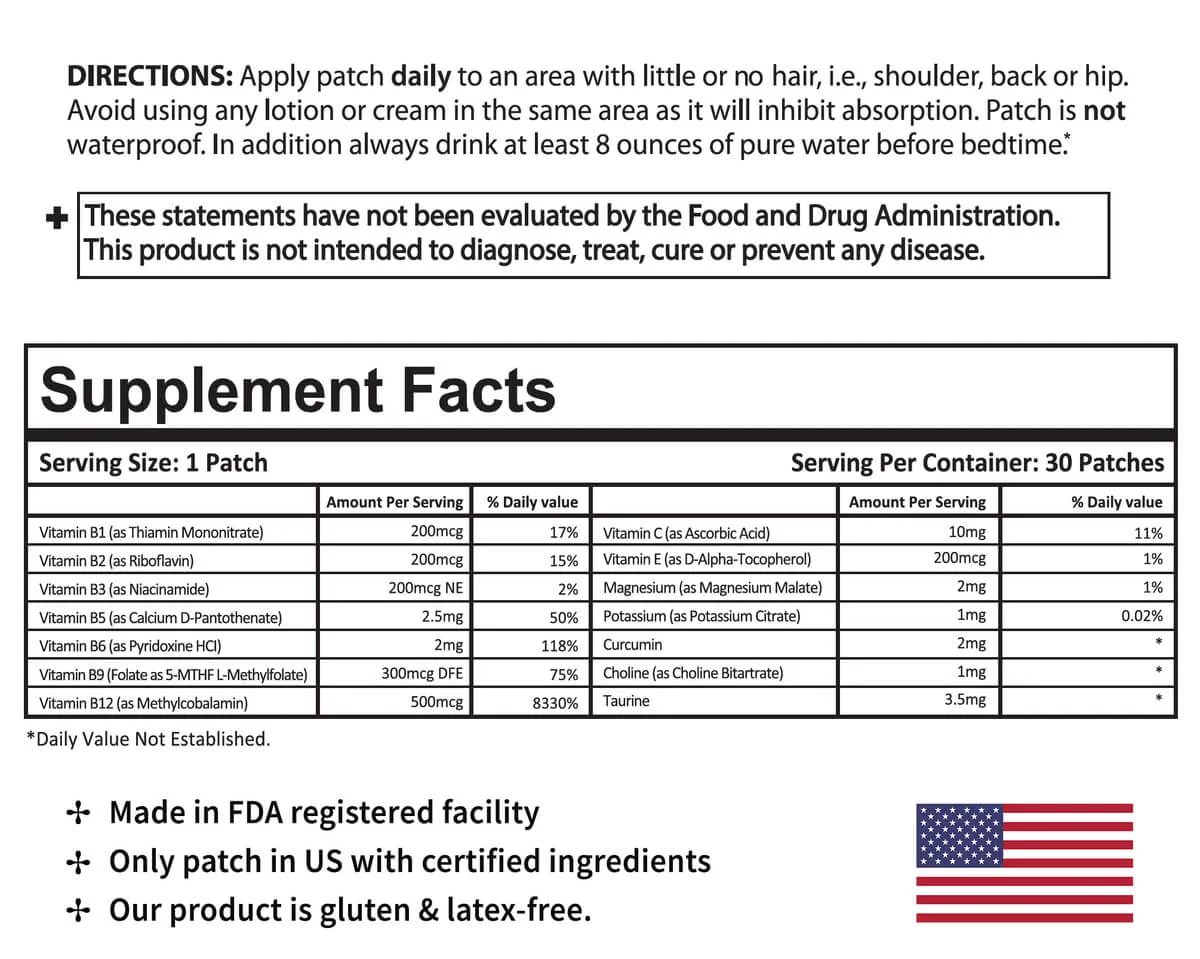
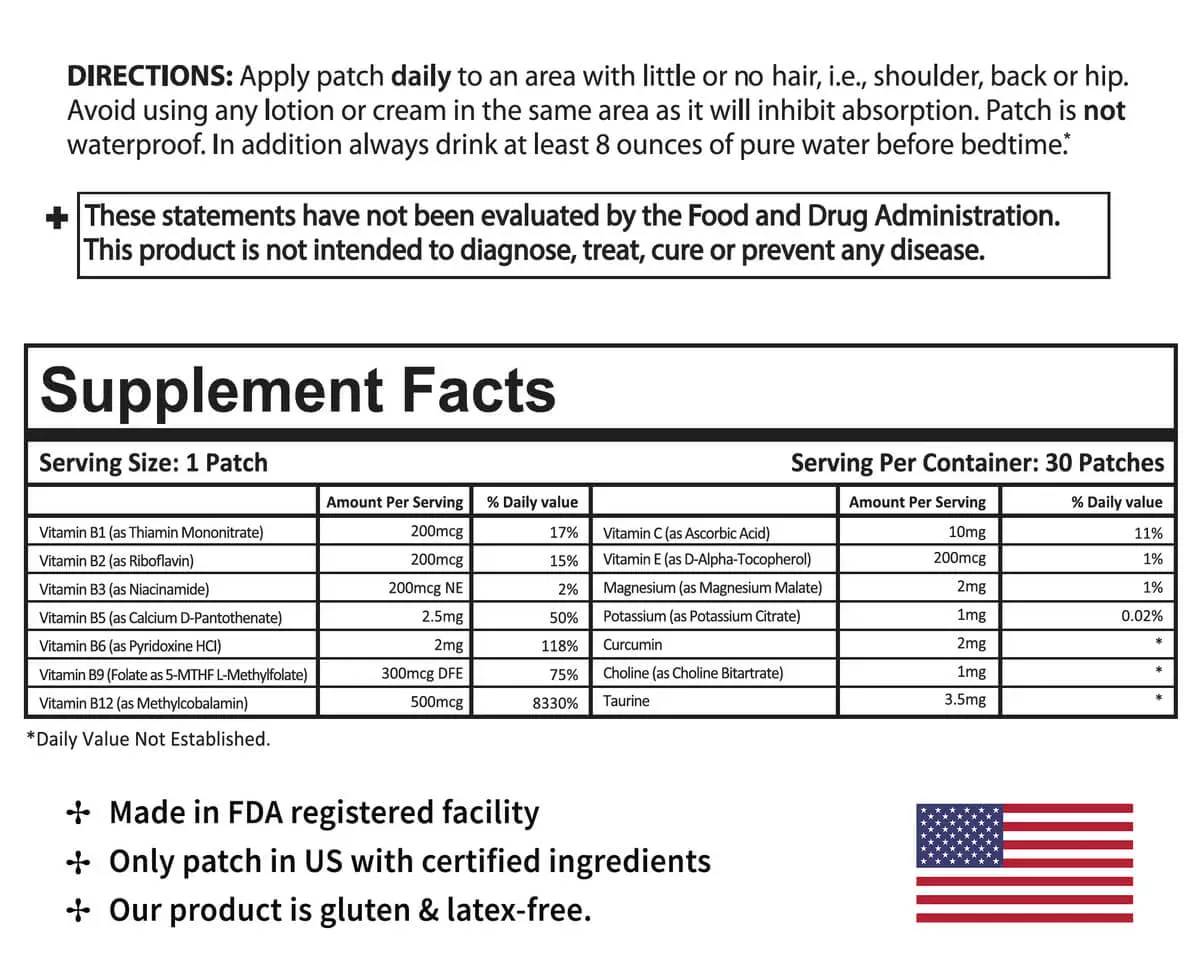
Featuring a powerhouse blend of vitamins, including C, B1, B2, B6, B12, and other B vitamins, the Happy Hour Hangover Patch is your ally in restoring balance to your body. Its gluten-free composition makes it suitable for everyone, and its simple application on a dry and hairless area ensures maximum absorption.
The patch’s PMD complex includes taurine, known for its metabolism-boosting and alertness-enhancing properties, and curcumin, a ‘golden’ ingredient for its anti-inflammatory benefits and liver health support.
bytox hangover patch cannot stop alcohol consumption
milk thistle and other all natural have a diuretic effect like vitamin b6 and many other nutrients all natural ingredients like vitamin b
bytox patch
acrylic copolymer adhesive
bytox patch negative effects
bytox patch
vitamin b1
one bytox patch does not surpass other supplements
one bytox patch
sensitive skin
other b vitamins
restore balance
vitamin b
bytox hangover patch
vitamin e
organic ingredients like milk thistle
apply to hairless area
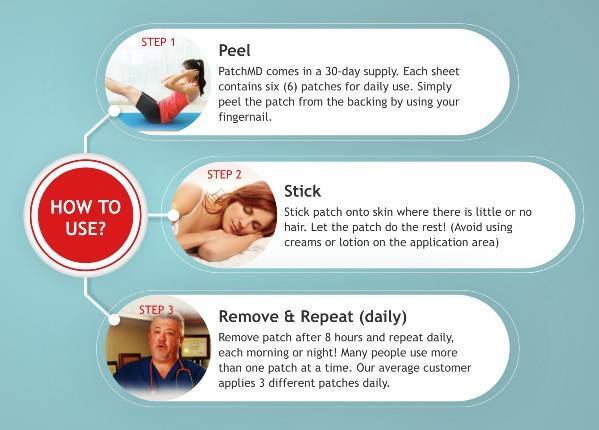
To use, gently pull the patch from its backing and apply. Its formulation is designed to prevent sensory impairment and replenish depleted nutrients, helping you function at your best on a day-to-day basis.
How to Use The PatchMD Happy Hour Patch
Our hangover patch should be applied BEFORE you consume alcohol. Apply the patch on an area of the body with little or no hair, such as the shoulder, back, or hip. Avoid using all lotions or cream in the same area as it will inhibit absorption. Patches are not waterproof.
- Remove hangover patch after 8 hours
- Rotate patch location daily
- If left on longer than 8 hours, use baby oil or rubbing alcohol to remove
- Stop use if you have an adverse skin reaction and contact PatchMD
- 100% satisfaction guarantee
PatchMD products are Latex, Lactose, Gluten, and Sugar-free
ALL PATCH ORDERS INCLUDE 30 PATCHES (30-DAY SUPPLY) and 100% Moneyback Guarantee
*These statements have not been evaluated by the Food and Drug Administration. This product is not intended to diagnose, treat, cure or prevent any disease.
Introducing the Happy Hour Hangover Supplement by PatchMD: Offering Relief without the Need for ‘Drunk Patches’.
Introducing the Happy Hour Hangover Supplement by PatchMD: Naturally Soothe Hangovers without ‘Natural Heals Hangover Patches’.
Experience the Happy Hour Hangover Supplement by PatchMD: Purchase Hangover Aid Today for Effective Relief.
Discover the Happy Hour Hangover Supplement by PatchMD: Purchase Hangover Remedy Today for Fast Relief.
Introducing the Happy Hour Hangover Supplement by PatchMD: Purchase Hangover Treatment Today for Effective Relief.
Discover the Happy Hour Hangover Supplement by PatchMD: Offering an Effective Alternative to Traditional Best Hangover Prevention Pills.
Ease Your Hangover with the Happy Hour Hangover Supplement by PatchMD: Available Online, No Need to Find a ‘Hangover Patch Near Me’.
Experience the Happy Hour Hangover Supplement by PatchMD: Say Goodbye to Hangovers After Drinking Alcohol.
Introducing the Happy Hour Hangover Supplement by PatchMD: Offering Relief Without the Need for Traditional Hangover Pills.
Discover the Happy Hour Hangover Supplement by PatchMD: Your Ultimate Hangover Cure Solution.
Introducing the Happy Hour Hangover Supplement by PatchMD: Offering Relief to Alleviate and Cure Hangovers Effectively.
Discover the Happy Hour Hangover Supplement by PatchMD: Say Goodbye to Hangovers After Enjoying an Alcoholic Drink.
Introducing the Happy Hour Hangover Supplement by PatchMD: Offering Relief Without the Need to Rely on Eating Greasy Food to Alleviate Hangovers.
Discover the Happy Hour Hangover Supplement by PatchMD: Effective Relief After Consuming Too Much Alcohol.
Additional information
| Weight | 0.0181436948 oz |
|---|
13 reviews for Happy Hour (Formerly Hangover Patch)
You must be logged in to post a review.



Eryn (verified owner) –
Repeat customer here! These really do lessen the severity of my hangover after a night out.
Jacqueline (verified owner) –
I’m a pretty healthy, I like feeling my best, so I don’t ever feel good after a night out with cocktails, and this patch makes me feel mentally and physically better. My son was here with his college buddies, and when I offered a patch to each of them the morning after they went out drinking, they thought it was strange, but every one of them said they felt great soon thereafter, and wanted to know where to buy them, and these are all big D1 football players. They work!
Bharat –
Nice Product
Mike –
I, also, was a little skeptical but these thing work 100%.
Highly recommend!
Anne –
These have saved my life! Lol As I’ve gotten older (mid 30s) my hangovers have gotten soooo much worse, but after trying these, I feel pretty good in the mornings. Highly recommend and way better than having to Remember to take a bunch of multi vitamins and Advil before bed.
Tarah Harper –
Alcohol consumption is not a big thing for me and I used to feel a world of hurt the day after only a couple of drinks. Good thing I found PatchMD. Each patch contains an extensive list of all of the ingredients you would look for in 5-10 pills (which is what I used to do). The last thing I want to do when drinking is swallow a handful of pills so I thank you for making this product. My hangover symptoms included literally the worst splitting headache and even body chills. So glad I can consume a couple of glasses of wine again, thank you!
Sandra –
I tried the bytox hangover patches but they are way overpriced in comparison. Go with the PatchMD to save money and get a lot more out of the product. The blend of vitamins nutrients and antioxidants is like an IV drip of goodness without the invasiveness. A+ Rating
Colin –
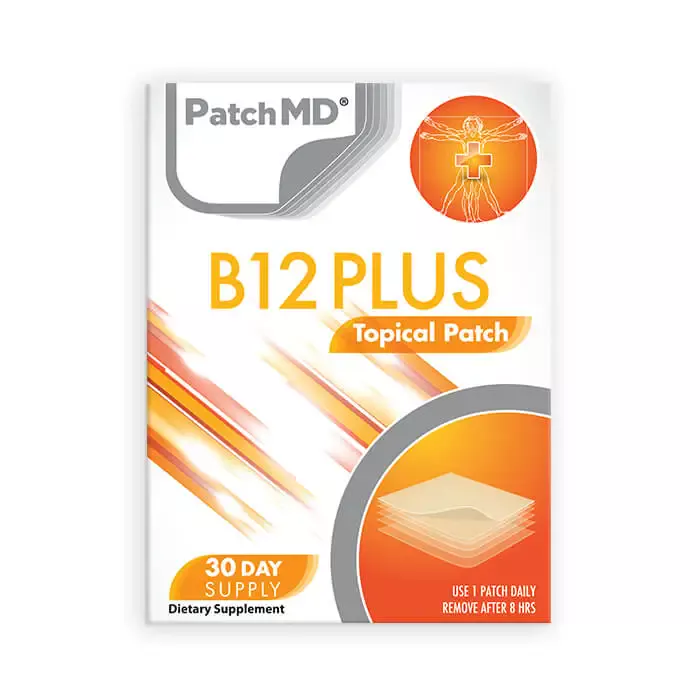
If you have trouble consuming alcohol without exceeding your natural limitations this may help. I drink on occasion and hangover remedies are a joke, prevention is the only way! I apply the patch 30 minutes or so before my first beverage, stay hydrated during the night (1 glass of water for ever 2 drinks and 1 drink of H2O before bed). I also like the vitamin b12 patches for the day after.
Brett Evans –
I don’t drink too often and have found that the older I get the worse are the severity of my hangovers. Now my morning recovery is a different story. I wake up feeling refreshed even after a night of overconsumption. I thought this was the placebo effect, but PatchMD product really works. I can tell when I don’t take it.
Jmelynn –
These patches are legit , We?ve used them to party and people are shocked when they wake up feeling fine ! Obsessed :-) and thankful for them
Jackie –
I was scepticle but purchased it and it works. I actually took it after the fact and it worked as well.
Michael L –
I’m a social drinker and have found that my body does not handle alcohol as well as I’ve gotten older. Sometimes I’ll have slight headaches or sluggishness the day after drinking. These patches are a life saver! I put them on before going out and they stave off my next day symptoms. These things actually work!
paul –